
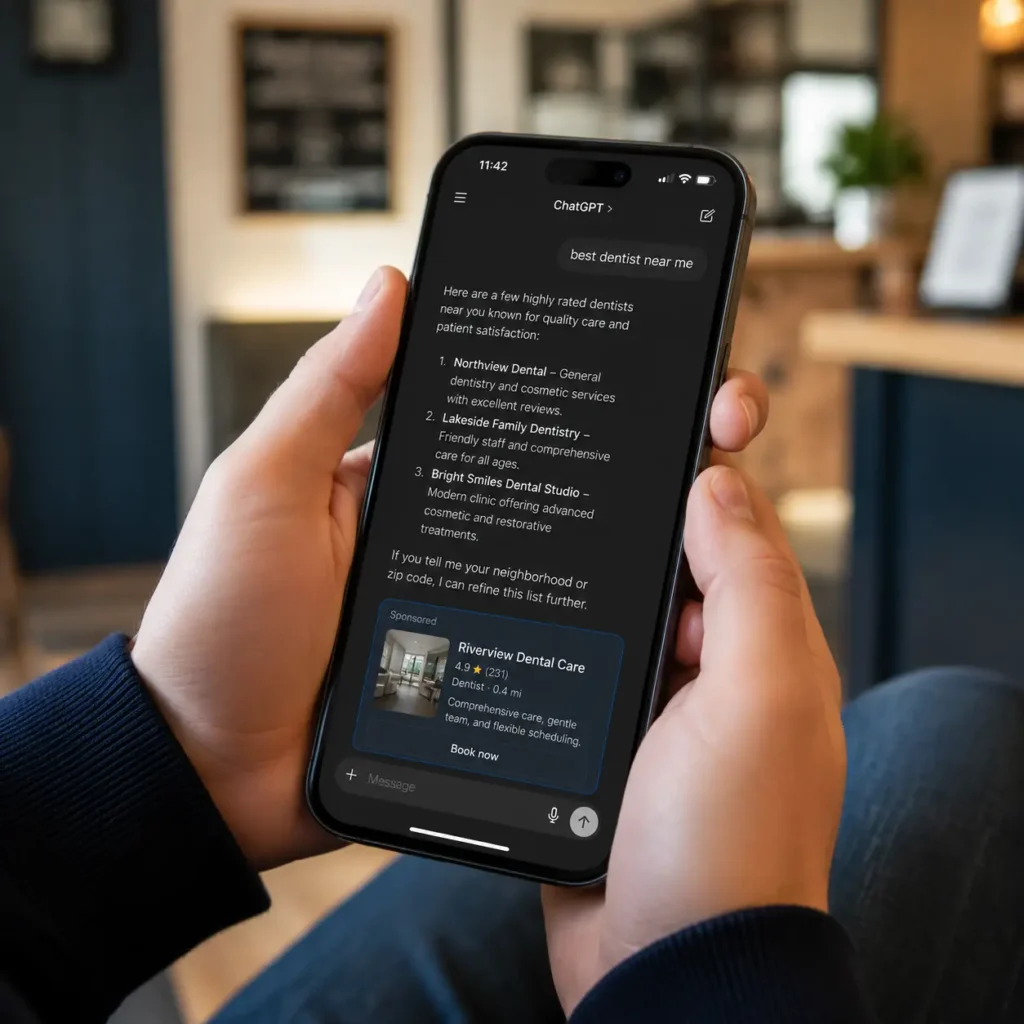
For local businesses, a website is often the first real interaction a potential customer has with the brand. Someone may find the business through Google, click from a map listing, tap an ad, read a blog, or search directly after hearing the name from a friend. In many cases, that first visit happens on a phone.
That matters because mobile visitors behave differently. They are often looking for quick answers, nearby services, simple contact options, and fast confirmation that they are in the right place. If the website is slow, hard to read, difficult to navigate, or frustrating to use on a small screen, the business can lose the lead before the person ever calls.
A mobile-first website is not just a smaller version of a desktop site. It is a website planned around how people actually search, compare, and contact local businesses from their phones. For service companies, healthcare practices, law firms, med spas, dental offices, tree service companies, contractors, and other local brands, mobile-first design can directly affect lead generation.
Surch Digital’s custom web development service helps businesses build websites that support visibility, user experience, and conversions across devices.
Local Search Often Starts on Mobile
Local search is naturally mobile. People search while they are on the go, sitting in their car, dealing with an urgent problem, comparing options at home, or trying to book an appointment quickly. A homeowner may search for a contractor after noticing a leak. A patient may look for a dentist between errands. A business owner may search for marketing help from their phone after a referral.
These visitors usually do not want to dig through a complicated website. They want to know what the business does, where it serves, whether it looks trustworthy, and how to contact the team.
That means mobile pages should answer the most important questions quickly. The service should be clear. The location or service area should be obvious. The call button should be easy to tap. Forms should be simple. Reviews, proof, and next steps should not be buried.
Surch Digital’s article on how customers choose service providers explains why trust, clarity, and convenience all influence local buying decisions.
Mobile Design Affects First Impressions
A website that looks outdated or broken on mobile can make a business feel less trustworthy. Even if the company is excellent, a poor mobile experience may create doubt. Visitors may wonder whether the business is professional, responsive, or easy to work with.
First impressions happen quickly. If text is too small, buttons are hard to tap, images load poorly, or the layout feels cluttered, visitors may leave. For high-trust industries like law firms, healthcare, med spas, dental practices, and home services, that first impression matters even more.
A mobile-first site should feel clean, easy, and direct. It should not require users to pinch and zoom. It should not hide important information behind confusing menus. It should not make visitors hunt for the phone number or contact form.
Surch Digital’s article on building trust online for brands explains why credibility is part of conversion, not just branding.
Speed Can Make or Break a Mobile Lead
Mobile users are often impatient because they are searching with intent. If a page takes too long to load, many visitors will leave before they even see the offer. This is especially costly when the business is paying for traffic through Google Ads, Facebook Ads, Instagram Ads, or other paid campaigns.
Slow mobile pages can affect both lead generation and marketing efficiency. If paid traffic lands on a slow page, cost per lead can rise. If SEO traffic lands on a slow page, users may bounce. If a potential customer is comparing three local businesses, the fastest and clearest site may win the lead.
Speed should be considered during website design, not patched later. Oversized images, unnecessary scripts, too many plugins, heavy animations, and cluttered layouts can all slow a site down.
Surch Digital’s article on how website speed impacts leads and SEO explains why performance is a conversion issue, not just a technical detail.
Click-to-Call Matters for Local Businesses
For many local businesses, the phone call is the conversion. A person may not want to fill out a long form or wait for an email response. They may want to call, ask a question, schedule a service, or confirm availability.
Mobile-first websites should make calling easy. Phone numbers should be visible, clickable, and placed where users naturally look. Sticky call buttons can work well for some service businesses, especially those with urgent lead types.
This matters for home services, tree services, roofing, dental offices, chiropractic practices, med spas, law firms, and other local businesses where people often want a direct response. A visitor should never have to copy and paste a phone number from a mobile site.
Surch Digital’s home services marketing agency page reflects the importance of easy lead paths for local service companies that depend on calls, quote requests, and booked jobs.
Forms Should Be Simple on Mobile
Long forms can hurt mobile conversions. A person using a phone may not want to type a detailed message, fill out unnecessary fields, or scroll through a complicated intake process. If the form feels like work, they may abandon it.
A mobile-friendly form should ask for only what is needed to start the conversation. Name, phone number, email, service needed, and a short message may be enough for many businesses. More detailed forms can be useful later in the process, but the first conversion point should feel easy.
Forms should also be easy to tap, with large fields, clear labels, simple error messages, and no broken formatting. If the form is hard to use, the business may blame the marketing channel when the real issue is mobile usability.
Surch Digital’s article on guide to creating high-converting landing pages explains how forms, layout, trust signals, and calls to action work together to support conversions.
Mobile Navigation Should Be Clear
Desktop navigation can often hold more items, dropdowns, and page paths. Mobile navigation needs to be more focused. Visitors should be able to find services, industries, about information, and contact options without confusion.
For local lead generation, the most important pages should be easy to reach. Service pages should not be hidden several clicks deep. Contact options should be visible. Industry or location pages should be easy to access when they matter to the buyer journey.
For Surch Digital, a strong navigation structure helps users find pages like services, industries we serve, search engine optimization, Google Ads management, and contact us.
The article on how website navigation impacts conversions explains why navigation is not just a design preference. It shapes how quickly users find what they need.
Mobile Pages Need Clear Above-the-Fold Messaging
On mobile, above-the-fold space is limited. That means the first screen needs to work hard. Visitors should immediately understand what the business offers and what action they can take.
A weak mobile hero section may include a vague headline, oversized image, small text, or no clear call to action. A stronger version tells the visitor what the business does, who it helps, and how to move forward.
For example, a local service website should not open with a generic phrase like “Solutions Built for You” if the visitor still has to scroll to understand the service. A better mobile message would clearly state the service, location, and primary value.
Surch Digital’s article on what makes a local service website actually convert explains why clarity above the fold is one of the most important parts of lead generation.
Mobile SEO and Lead Generation Work Together
Mobile-first design supports SEO because search visibility is only valuable if the visitor experience works after the click. A page may rank well, but if mobile users leave because the site is frustrating, the business still loses opportunities.
A mobile-friendly site should have clean structure, readable content, fast performance, clear headings, relevant internal links, and pages that match search intent. Service pages should be specific. Blog content should be easy to skim. Calls to action should guide users naturally toward the next step.
Surch Digital’s search engine optimization service helps businesses improve visibility, while strong website development helps turn that visibility into leads.
Paid Ads Need Mobile-Ready Landing Pages
Paid traffic often comes from mobile devices. If a business runs Google Ads, Facebook Ads, Instagram Ads, YouTube Ads, Bing Ads, or other campaigns, the landing page must be ready for mobile users.
A paid ad campaign can fail if the page does not match the ad, loads slowly, has a difficult form, or hides the call to action. This is why ad performance and web design should not be separated.
For example, a Google Ads campaign for a local service should send people to a page that directly matches the service in the ad. The page should load quickly, explain the offer, show trust signals, and make it easy to call or submit a form.
Surch Digital’s pay per click ads management and Google Ads management services work best when landing pages support conversion from the beginning.
Mobile Matters for Google Business Profile Traffic
Many mobile users find local businesses through Google Business Profile listings. They may click to call directly from the profile, request directions, read reviews, or tap through to the website.
If they click through to a website, the mobile experience should reinforce the trust created by the profile. The website should match the business information, explain services clearly, and make the next step simple.
A strong Google Business Profile can drive visibility, but the website still matters when users want more information before contacting the business.
Surch Digital’s Google Business Profile management service helps local businesses keep their profile aligned with their website, services, and lead-generation goals.
Mobile Content Should Be Easy to Scan
Mobile visitors often scan before they read. Long paragraphs, dense pages, and unclear headings can make a page feel overwhelming. That does not mean content should be thin. It means content should be structured clearly.
Strong mobile content uses short sections, helpful headings, clear calls to action, and logical internal links. It answers questions in the order users are likely to have them. It avoids making people scroll through fluff before getting to the point.
This is especially important for service pages and educational blogs. A mobile visitor should be able to quickly identify whether the business offers what they need, whether it serves their area, and why it is worth contacting.
Surch Digital’s article on human-first content and professional SEO services explains why content should be written for real users, not just search engines.
Trust Signals Should Be Mobile-Friendly
Reviews, testimonials, certifications, awards, case studies, before-and-after examples, team photos, and service guarantees can all help build trust. But on mobile, those elements need to be placed carefully.
If trust signals are buried at the bottom of a long page, many visitors may never see them. If they are too large or cluttered, they may distract from the main call to action. The best mobile designs use trust signals to support the decision without overwhelming the page.
For high-trust industries like dental marketing, law firm marketing, med spa marketing, and chiropractic marketing, credibility is a major part of conversion. People want to know they are choosing a business that understands their needs.
Mobile Design Should Support Retargeting
Not every mobile visitor will convert on the first visit. Some will leave, compare options, and return later. A mobile-first website should work with retargeting campaigns by giving visitors a clear experience when they come back.
If someone clicks a retargeting ad from Facebook or Instagram, the landing page should be just as strong on mobile as it is on desktop. The message should match the ad, the page should load quickly, and the next step should be easy.
Surch Digital’s article on how retargeting helps turn lost website visitors into leads explains why returning visitors can become some of the most valuable prospects in a marketing system.
Mobile-First Design Helps Multi-Channel Marketing
A local business may be using SEO, Google Ads, social ads, Google Business Profile, email marketing, YouTube, referrals, and content marketing at the same time. All of those channels may send people to the website.
That means the website has to support the whole marketing system. A weak mobile site can limit every channel. A strong mobile site can make every channel more effective.
This is why mobile-first design should not be treated as a web design trend. It is a business growth issue. The easier it is for mobile visitors to understand, trust, and contact the business, the more value the company can get from its marketing efforts.
Surch Digital’s services are built around connecting strategy, visibility, website performance, and lead generation instead of treating each channel as a separate project.
Signs Your Website Is Not Mobile-First Enough
A business may need mobile improvements if visitors have to pinch and zoom, buttons are hard to tap, forms are too long, the phone number is not clickable, pages load slowly, menus are confusing, text is dense, images break the layout, or calls to action are hard to find.
Other warning signs include high mobile bounce rates, low mobile conversion rates, poor paid ad performance, weak local lead volume, or customers saying they had trouble using the site.
A website may look good on desktop and still fail on mobile. That is why mobile testing should be part of every redesign, landing page build, and conversion review.
Final Thoughts
Mobile-first websites matter for local lead generation because local buyers often search, compare, and contact businesses from their phones. They expect fast pages, clear service information, simple navigation, clickable phone numbers, easy forms, and visible trust signals.
A strong mobile experience can support SEO, paid ads, Google Business Profile traffic, retargeting, and multi-channel marketing. A weak mobile experience can waste traffic, increase ad costs, and cause potential customers to choose a competitor.
For local businesses, the website is not just a digital brochure. It is a lead-generation tool. Building it around mobile users helps make every click, tap, search, and ad dollar work harder.